

The Agile Manifesto, on which project implementation using agile methodologies (e.g. Scrum) should be based, says that we should value more:
PRINCE2, on the other hand, focuses on processes, documentation and long-term planning, i.e. the elements listed on the right, which for the authors of the Manifesto are not unimportant, but certainly less important.
The idea behind Scrum is the iterative, incremental and agile delivery of a working product (especially software). Scrum is about fast and efficient delivery.
On the other hand, projects require a certain level of organisation and management, which is provided by the use of management methodologies such as PRINCE2.
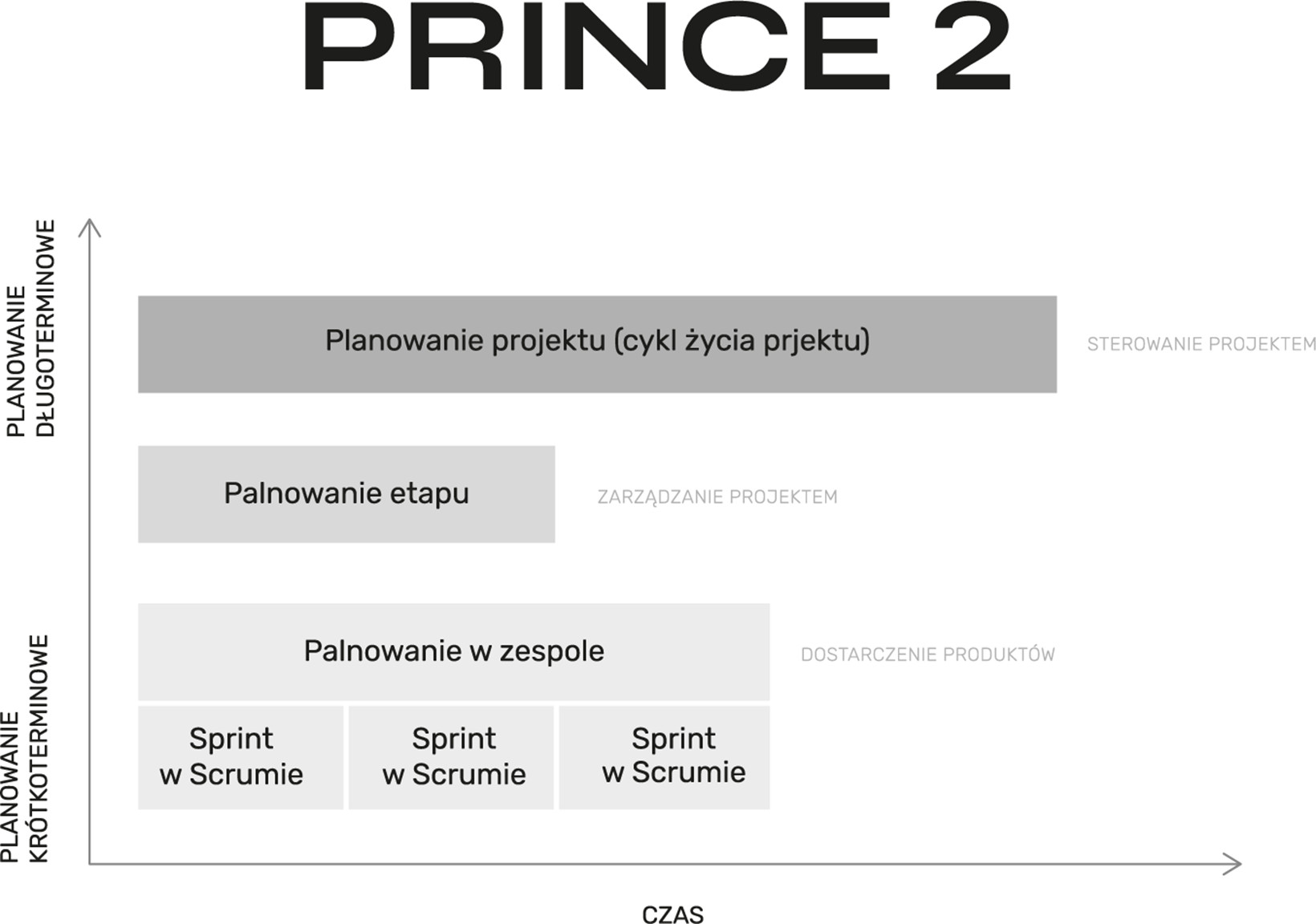
PRINCE2 describes the project management process, but does not specify the delivery (manufacturing) process. From the PRINCE2 point of view the process ends at the level of "Task Group", then there is a "black box". Here the well-known saying "Where the rules end, Pruszków begins" may come to mind.
Is it really the case that where PRINCE2 ends, freelancing begins? This is exactly the great place to use agile methodologies. Scrum focuses on the Production Team, clarifies the roles of individual team members, organises their work, short-term goals and plans. When combining both methodologies (classic and agile), we can lead to the materialisation of a far more optimistic maxim: "Where PRINCE2 ends, Scrum begins".
There are at least a few different ways to combine PRINCE2 and Scrum. Personally, I have come across the following three:
The first of the above-mentioned ways often means introducing the use of Scrum by the implementation teams without the knowledge not only of the Customer, but also "the top", i.e. the senior management of their own organisation. Due to the frequent distance of decision-makers from changes and agile implementation, it is sometimes better, faster and more effective to implement changes "from below".
The second way is to add some PRINCE2 products to Scrum. This is most often done to appease decision makers - people who think Scrum means chaos, lack of documentation and project control.
The last way is probably the most common today. Most organisations are no longer afraid of agile project delivery. Almost every software company boasts about being Agile. Combined with the classic project delivery method, even in the public sector that loves PRINCE2, this marriage of methodologies doesn't have to be hidden. On the contrary, it can be bragged about.